
Biography
Early Life
Born in 1932 at Alipur, a tehsil of Muzaffargarh District in Punjab, Pakistan. He belonged to a Sayyid family tracing descent from Syed Jalal-ud-Din Surkh-Posh Bukhari. He began his religious studies at Madrasa Sadeqiya in Khanpur (1947), studying Quranic commentary under Allama Hussain Bakhsh Jarra, and continued at madrasas in Khangarh and Dera Ismail Khan before travelling to Najaf for higher studies.
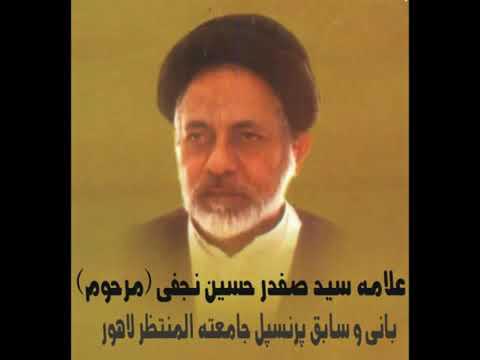
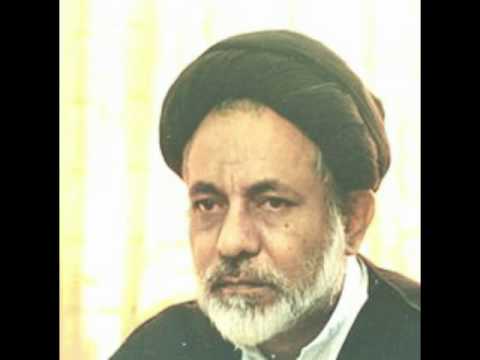
Syed Safdar Hussain Najafi (1932-1989), honoured with the title Muhsin-e-Millat (Benefactor of the Nation), was a prominent Pakistani Usuli Twelver Shia scholar. After early religious education in Punjab, he travelled to Najaf al-Ashraf in October 1951, where he studied advanced jurisprudence (Dars-e-Kharij) and the classical texts Kifaya, Rasael and Makasib under leading authorities including Grand Ayatollahs Muhsin al-Hakim and Abul Qasim al-Khoei, and received a certification in Hadith from Agha Buzurg Tehrani. He returned to Pakistan in 1956.
On his return he took charge of Jamia-tul-Muntazar in Model Town, Lahore, serving as its principal from 1956 until his death in 1989 and developing it into the largest Shia seminary (hawza) in Pakistan. He devoted his life to religious education, scholarship and the training of students, many of whom became notable scholars in their own right, including Hafiz Basheer Hussain Najafi, Hafiz Riaz Hussain Najafi and Ghulam Hussain Najafi.
He was a prolific author and translator, credited with roughly 40 original books and more than 60 Urdu translations of important Shia works, among them Makarem Shirazi's 27-volume Tafseer-e-Namoona and writings of Imam Khomeini. He also founded the monthly magazine Al-Muntazar. His scholarly specialities spanned Tafsir, Hadith, Kalam, Fiqh and Islamic philosophy.
He died on 3 December 1989 in Lahore and is buried within the grounds of Jamia-tul-Muntazar in H Block, Model Town, Lahore.
Education & Training
Madrasa Sadeqiya, Khanpur (1947)
Madrasa in Khangarh (1949)
Madrasa Bab un Najaf, Dera Ismail Khan
Hawza Ilmiyya, Najaf al-Ashraf (1951-1956) - studied Kifaya, Rasael, Makasib and completed Dars-e-Kharij
Positions & Achievements
Principal of Jamia-tul-Muntazar (Hawza Ilmiyya), Lahore (1956-1989)
Founder and editor of the monthly Al-Muntazar magazine
Books & Works
Founder of the monthly Islamic magazine Al-Muntazar; author of around 40 books and translator of over 60 works into Urdu, most notably the 27-volume Tafseer-e-Namoona of Naser Makarem Shirazi.
📖
Founded the Al-Muntazar monthly magazine
📖
Around 40 authored books
📖
Urdu translation of Tafseer-e-Namoona (27 volumes) by Naser Makarem Shirazi
📖
Urdu translation of Tozih ul Masail by Imam Khomeini
📖
Urdu translation of Wilayat-e-Faqeeh by Ayatollah Hussain Ali Montazeri
📖
Urdu translation of Hukumat-e-Islami by Imam Khomeini
📖
Urdu translation of Tazkira tul Khawaas by Sibt ibn Jaozi