Early Life
Born in Alipur (Shah di Khui), Muzaffargarh District, Punjab, Pakistan, into a Sayyid family; his father Syed Hussain Baksh Naqvi was a farmer. He memorized the Quran (becoming a hafiz) as a young boy under the guidance of his uncle and teacher, and studied traditional Islamic sciences before enrolling at Jamia-tul-Muntazar, Lahore in 1957.
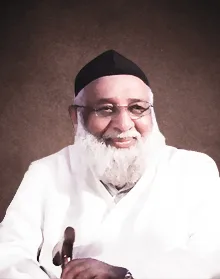
Ayatollah Hafiz Syed Riaz Hussain Najafi is one of the most senior Twelver Shia scholars in Pakistan, best known as the long-serving principal of Jamia-tul-Muntazar in Lahore — the country's largest Shia seminary — and as President of Wifaq-ul-Madaris Al-Shia Pakistan, the national federation of Shia religious schools. Born in 1941 in Alipur, in the Muzaffargarh District of Punjab, into a Sayyid family of modest farming background, he showed an early aptitude for religious learning.
As a young boy he memorized the entire Quran, earning the title Hafiz, under the guidance of his uncle and teacher Syed Muhammad Yar Shah. After several years of foundational study in the traditional Islamic sciences, he enrolled at Jamia-tul-Muntazar in Lahore in 1957, where he studied under leading scholars of the seminary including Allama Akhtar Abbas Najafi and Syed Safdar Hussain Najafi, completing advanced texts such as Kifayat al-Usul by 1963.
To pursue the highest levels of Shia scholarship, he travelled to the holy city of Najaf in Iraq, where he studied between 1963 and 1969. There he attended the lessons of some of the foremost authorities of the age, including Grand Ayatollah Abu al-Qasim al-Khoei and Grand Ayatollah Muhsin al-Hakim, immersing himself in advanced jurisprudence (fiqh) and its principles (usul al-fiqh). He also took part in compiling the jurisprudential lectures of Ayatollah al-Khoei, which were later published.
Returning to Pakistan in 1969, he took up the leadership of Jamia-tul-Muntazar as its chief administrator (Muntazim-e-Ala), a role he has held ever since. Under his stewardship the seminary grew into the largest and most influential Shia educational institution in Pakistan, and for more than two decades he personally taught the advanced dars-e-kharij classes in fiqh and usul, training generations of scholars and clerics.
Alongside his work at the seminary, he became a central figure in the organization of Shia religious education nationally. In 1979 he founded Wifaq Ulama-e-Shia Pakistan, and in 1989, following the death of Syed Safdar Hussain Najafi, he became President of Wifaq-ul-Madaris Al-Shia Pakistan, the body that sets curricula and standards for Shia seminaries across the country — a position he continues to hold, guiding its supreme council and administrative reforms.
Beyond formal instruction, Najafi established a range of supporting institutions, including a research centre for Quranic and Hadith studies (Dar al-Tahqiq), a propagation and outreach institute (Dar al-Tabligh), and welfare and financial bodies attached to the seminary. He has also supervised scholarly publishing projects, among them the Urdu translation of the popular prayer collection Mafatih al-Jinan.
Widely respected across sectarian lines, he has been a consistent advocate of Muslim unity and harmony, and has represented Pakistani Shia scholarship at numerous national and international conferences. Now in his eighties, he remains an active religious authority, delivering lessons, majalis and guidance, and is regarded as one of the elder statesmen of the Shia clerical establishment in Pakistan.